تفاوت بین CFD طلا و قراردادهای آتی طلا چیست؟
پاسخ کوتاه:
هر دو CFD طلا و قراردادهای آتی طلا امکان قرار گرفتن در معرض نوسانات قیمت طلا را فراهم میکنند، اما در نحوه معامله شدن با هم تفاوت دارند. CFDها قراردادهای فرابورس (OTC) هستند که توسط کارگزاران با اندازهگیری انعطافپذیر و بدون تاریخ انقضای ثابت ارائه میشوند، در حالی که قراردادهای آتی، قراردادهای استاندارد شدهای هستند که در بورسهای تحت نظارت با تاریخهای انقضا و مشخصات قرارداد از پیش تعیینشده معامله میشوند.
CFD طلا چیست؟
یک CFD طلا (قرارداد مابهالتفاوت) یک ابزار مشتقه مالی است که به معاملهگران امکان میدهد بدون مالکیت فلز فیزیکی، روی تغییرات قیمت طلا سرمایهگذاری کنند.
به جای خرید شمش یا سکه طلا، معاملهگر وارد قراردادی بر اساس تفاوت بین قیمت افتتاحیه و قیمت پایانی طلا میشود. اگر قیمت در جهت مورد انتظار حرکت کند، معاملهگر ممکن است سود کسب کند. اگر برخلاف موقعیت حرکت کند، ممکن است زیان رخ دهد.
CFDهای طلا معمولاً برای موارد زیر استفاده میشوند:
- معاملات کوتاهمدت
- پوشش ریسک (هجینگ)
- قرار گرفتن در معرض اهرمی طلا
- معامله در بازارهای صعودی و نزولی
از آنجا که CFDها مستقیماً با یک کارگزار معامله میشوند و نه در یک بورس، اندازه قراردادها اغلب انعطافپذیر است و موقعیتها معمولاً میتوانند تا زمانی که الزامات مارجین رعایت شود، باز بمانند.
قرارداد آتی طلا چیست؟
قرارداد آتی طلا یک توافق استاندارد شده است که در یک بورس آتی تحت نظارت معامله میشود تا مقدار مشخصی از طلا با قیمتی از پیش تعیینشده در تاریخی در آینده خرید یا فروخته شود.
هر قرارداد آتی دارای ویژگیهای از پیش تعریفشدهای است، از جمله:
- اندازه قرارداد
- ماه انقضا
- روش تسویه
- قوانین بورس
اگرچه برخی قراردادهای آتی امکان تحویل فیزیکی را فراهم میکنند، بسیاری از معاملهگران به جای تحویل گرفتن طلا، موقعیتهای خود را قبل از انقضا میبندند یا تمدید (رول) میکنند.
CFD طلا در مقابل قراردادهای آتی طلا: تفاوت چیست؟
اگرچه هر دو محصول نوسانات بازار طلا را دنبال میکنند، اما از نظر ساختار و مکانیزم معاملاتی تفاوت قابل توجهی دارند.
ویژگی | CFD طلا | قراردادهای آتی طلا |
بازار | فرابورس (OTC) | بورس آتی تحت نظارت |
مالکیت | بدون مالکیت طلای فیزیکی | فقط قرارداد؛ بسته به قرارداد، تحویل فیزیکی ممکن است امکانپذیر باشد |
اندازه قرارداد | انعطافپذیر | استاندارد شده |
انقضا | معمولاً بدون تاریخ انقضای ثابت | تاریخ انقضای ثابت |
تسویه | تسویه نقدی | تسویه نقدی یا فیزیکی بسته به قرارداد |
اندازه موقعیت | امکان موقعیتهای کوچک یا بزرگ | اندازههای ثابت قرارداد |
هزینههای معاملاتی | اسپرد و احتمال هزینه تأمین مالی شبانه | کارمزد بورس، کارمزد کارگزاری، کمیسیونها |
اهرم | در دسترس | در دسترس |
منبع قیمت | بر اساس قیمتهای بازار پایه | کشف قیمت بورس |
انعطافپذیری | بالا | استانداردتر |
مناسب برای | معاملهگران خرد فعال | معاملهگران نهادی و حرفهای، پوششدهندگان ریسک |
هزینههای معاملاتی چگونه متفاوت است؟
درک هزینههای معاملاتی مهم است زیرا میتوانند بر عملکرد کلی معاملات تأثیر بگذارند.
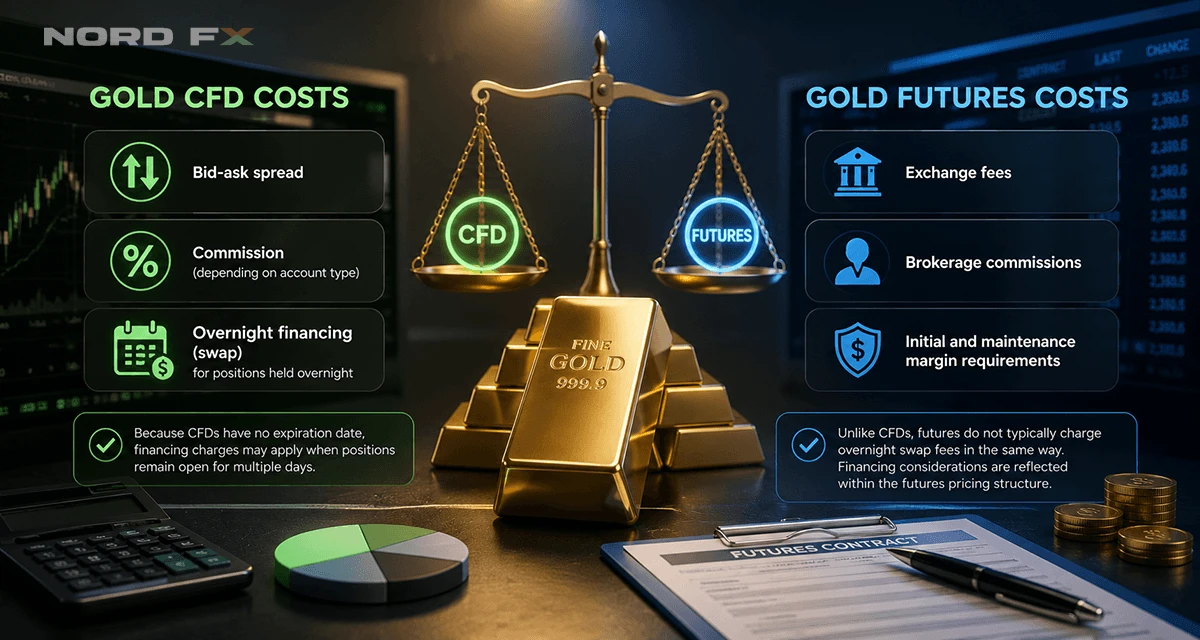
هزینههای CFD طلا
هزینههای معمول ممکن است شامل موارد زیر باشد:
- اسپرد خرید-فروش
- کمیسیون (بسته به نوع حساب)
- تأمین مالی شبانه (سواپ) برای موقعیتهای نگهداشته شده در طول شب
از آنجا که CFDها تاریخ انقضا ندارند، در صورتی که موقعیتها برای چند روز باز بمانند، ممکن است هزینههای تأمین مالی اعمال شود.
هزینههای قراردادهای آتی طلا
قراردادهای آتی طلا عموماً شامل موارد زیر میشوند:
- کارمزد بورس
- کمیسیونهای کارگزاری
- الزامات مارجین اولیه و نگهداری
برخلاف CFDها، قراردادهای آتی معمولاً هزینه سواپ شبانه را به همان شکل دریافت نمیکنند. در عوض، ملاحظات تأمین مالی در ساختار قیمتگذاری قراردادهای آتی منعکس میشود.
کدام محصول انعطافپذیرتر است؟
CFDهای طلا به طور کلی انعطافپذیری بیشتری برای بسیاری از معاملهگران خرد فراهم میکنند.
مزایا شامل موارد زیر است:
- اندازههای موقعیت کوچکتر
- بدون انقضای قرارداد
- امکان باز کردن موقعیتها با سرمایه نسبتاً کم
- مقیاسبندی آسانتر موقعیت
قراردادهای آتی طلا بر استانداردسازی تأکید دارند.
مزایا شامل موارد زیر است:
- معاملات متمرکز در بورس
- کشف قیمت شفاف
- نقدشوندگی نهادی بالا
- مشخصات ثابت قرارداد
هیچکدام از این محصولات ذاتاً بهتر نیستند—انتخاب مناسب به اهداف معاملاتی، سرمایه در دسترس و سبک معاملاتی ترجیحی بستگی دارد.
کدام محصول ممکن است برای معاملهگران مختلف مناسب باشد؟
پروفایل معاملهگر | CFD طلا | قراردادهای آتی طلا |
مبتدی | اغلب به دلیل اندازهگیری انعطافپذیر مناسب است | ممکن است پیچیدهتر باشد |
معاملهگر کوتاهمدت | انتخاب رایج | همچنین مناسب |
پوششدهنده ریسک بلندمدت | کمتر رایج | بهطور مکرر استفاده میشود |
شرکتکننده نهادی | کمتر رایج | رایج |
معاملهگر با سرمایه کمتر | اغلب در دسترستر | اندازههای استاندارد قرارداد ممکن است به سرمایه بیشتری نیاز داشته باشند |
مثال عملی
دو معاملهگر را تصور کنید که هر دو انتظار دارند قیمت طلا افزایش یابد.
معاملهگر A دارای حساب معاملاتی ۱٬۰۰۰ دلاری است و میخواهد یک موقعیت نسبتاً کوچک را معامله کند در حالی که انعطافپذیری را حفظ میکند. یک CFD طلا ممکن است به این معاملهگر اجازه دهد اندازه موقعیت مناسبی را انتخاب کند و معامله را بدون نگرانی از انقضای قرارداد باز نگه دارد.
معاملهگر B یک سبد بزرگتر را مدیریت میکند و میخواهد با استفاده از قراردادهای استاندارد شده معاملهشده در یک بورس تحت نظارت، در برابر ریسک آینده پوشش ایجاد کند. قراردادهای آتی طلا ممکن است با این هدف بهتر مطابقت داشته باشند زیرا مشخصات قرارداد، تاریخهای انقضا و رویههای تسویه استاندارد شدهاند.
اگرچه هر دو معاملهگر به دنبال قرار گرفتن در معرض همان بازار هستند، اما به دلیل تفاوت در اهدافشان از ابزارهای متفاوتی استفاده میکنند.
ریسکهای اصلی چه هستند؟
هر دوی CFD طلا و قراردادهای آتی طلا شامل معاملات اهرمی هستند، به این معنا که حرکات نسبتاً کوچک بازار میتواند تأثیر بزرگتری بر سود و زیان داشته باشد.
ریسکهای رایج شامل موارد زیر است:
- نوسانات بازار
- ریسک اهرم
- کال مارجین
- حرکات بازار در طول شب
- تغییرات نقدشوندگی در دورههای پرنوسان
درک نحوه عملکرد هر محصول قبل از معامله ضروری است.
اشتباهات رایج معاملهگران
فرض یکسان بودن هر دو محصول
هر دو از قیمت طلا پیروی میکنند، اما مکانیزم معاملاتی آنها بهطور قابل توجهی متفاوت است.
نادیده گرفتن تاریخهای انقضا
قراردادهای آتی منقضی میشوند. CFDها معمولاً منقضی نمیشوند.
غفلت از هزینههای معاملاتی
CFDها ممکن است شامل هزینههای تأمین مالی شبانه باشند، در حالی که قراردادهای آتی شامل هزینههای مرتبط با بورس و کمیسیونهای کارگزاری هستند.
استفاده از اهرم بیش از حد
اهرم بالاتر هم سودهای بالقوه و هم زیانهای بالقوه را افزایش میدهد.
انتخاب ابزار نادرست
انتخاب یک محصول بدون در نظر گرفتن اهداف معاملاتی، اندازه حساب یا دوره نگهداری ممکن است منجر به پیچیدگی یا هزینههای غیرضروری شود.
سوالات متداول
آیا CFD طلا و قراردادهای آتی طلا یکسان هستند؟
خیر. هر دو امکان قرار گرفتن در معرض نوسانات قیمت طلا را فراهم میکنند، اما CFDها قراردادهای فرابورس ارائهشده توسط کارگزاران هستند، در حالی که قراردادهای آتی، قراردادهای استاندارد شدهای هستند که در بورسهای تحت نظارت معامله میشوند.
آیا CFDهای طلا منقضی میشوند؟
در بیشتر موارد، CFDهای طلا تاریخ انقضای ثابتی ندارند و این امکان را میدهند که موقعیتها تا زمانی که الزامات مارجین حفظ شود، باز بمانند.
آیا قراردادهای آتی طلا میتوانند منجر به تحویل فیزیکی شوند؟
برخی از قراردادهای آتی طلا در صورت نگهداری تا انقضا امکان تحویل فیزیکی را فراهم میکنند، اگرچه بسیاری از معاملهگران قبل از وقوع آن، موقعیتهای خود را میبندند یا تمدید میکنند.
کدام محصول معمولاً به سرمایه کمتری نیاز دارد؟
CFDهای طلا اغلب از طریق اندازههای کوچکتر موقعیت، انعطافپذیری بیشتری را فراهم میکنند، در حالی که قراردادهای آتی استاندارد ممکن است بسته به بورس و مشخصات قرارداد به سرمایه بیشتری نیاز داشته باشند.
آیا هر دو محصول را میتوان با اهرم معامله کرد؟
بله. هر دوی CFD طلا و قراردادهای آتی طلا معمولاً از مارجین استفاده میکنند، اگرچه الزامات مارجین و قوانین معاملاتی متفاوت است.
چرا قیمتهای قراردادهای آتی طلا با طلای نقدی متفاوت است؟
قیمتهای قراردادهای آتی ممکن است با قیمتهای نقدی متفاوت باشند زیرا عواملی مانند هزینههای تأمین مالی، هزینههای نگهداری، نرخ بهره و زمان باقیمانده تا انقضای قرارداد را منعکس میکنند.
کدام محصول برای مبتدیان بهتر است؟
پاسخ جهانی وجود ندارد. بسیاری از مبتدیان به دلیل اندازهگیری انعطافپذیر موقعیت و دسترسی سادهتر، CFD طلا را ترجیح میدهند، در حالی که معاملهگران باتجربه و نهادها اغلب از قراردادهای آتی طلا برای معاملات استاندارد در بورس استفاده میکنند.
نتیجهگیری
هر دوی CFD طلا و قراردادهای آتی طلا به معاملهگران امکان میدهند بدون خرید طلای فیزیکی در نوسانات بازار طلا شرکت کنند، اما برای اهداف متفاوتی طراحی شدهاند.
CFDهای طلا بر انعطافپذیری تأکید دارند و به معاملهگران امکان میدهند اندازه موقعیت را انتخاب کنند و عموماً از انقضای قرارداد اجتناب کنند. قراردادهای آتی طلا بر معاملات استاندارد شده در بورس با مشخصات ثابت قرارداد، تاریخهای انقضا و کشف قیمت متمرکز تمرکز دارند.
درک تفاوتهایی مانند ساختار قرارداد، هزینههای معاملاتی، اهرم، تسویه و انقضا میتواند به معاملهگران کمک کند تا ابزاری را انتخاب کنند که بهترین تطابق را با اهداف، سبک معاملاتی و تحمل ریسک آنها داشته باشد.
بازگشت بازگشت